Long before the tattoo machine, there was a needle, a hand, and a rhythm. In Vietnam, that rhythm is older than the written record, and it is coming back.
Roots Older Than the Machine
Tattooing in Vietnam goes back to the earliest layers of its history. Ancient Chinese chronicles describe the Bách Việt peoples, among them the ancestors of the Việt, as văn thân, "marked bodies." Their skin carried patterns of water creatures and dragons. The reason was practical and spiritual: people living by rivers and the sea believed the marks would disguise them as creatures of the water and protect them from harm. The legend of Sơn Tinh and Thủy Tinh echoes this deep bond between the people and the water.
Through later dynasties, ink stayed tied to identity and courage. Trần-era soldiers are remembered for the words Sát Thát ("Kill the Mongols") marked on their arms, a vow worn on the body. Dragon tattoos on the thighs became a known custom among men of the period. In the highlands, several ethnic communities used tattooing as a rite of passage, marking adulthood, belonging, and spiritual protection.
These marks were not made with machines. They were made by hand, with sharpened thorns, bamboo or metal points, and natural pigment, one puncture at a time.
A Shared Tradition Across Southeast Asia
Vietnam is not alone in this. Hand-tapped and hand-poked tattooing has deep roots across the region: sak yant in Thailand, batok in the Philippines, and the tribal traditions of Borneo. Each culture treats the act as more than decoration. It is ritual, protection, and storytelling.
That is the lineage modern handpoke belongs to. It is not a trend invented by social media. It is a very old technique being picked up by a new generation.
From Heritage to the Modern Studio
Today's handpoke keeps the principle and upgrades everything around it. The needle is now a sterile, single-use, medical-grade needle. The pigment is professional tattoo ink. The workspace is clean and controlled, with gloves, barriers, and proper sterilization.
What stays the same is the human pace. There is no motor, no buzzing, just a steady hand placing the design dot by dot.
For Vietnamese artists and clients, handpoke is also a way to reconnect with heritage. Đông Sơn drum patterns, brocade geometry, lotus and dragon motifs, and traditional calligraphy all suit a method that builds an image from dots and fine lines, much as these motifs were built by hand in the first place.
How Handpoke Works
The technique is simple to describe and hard to master.
- The design is transferred to the skin as a stencil or drawn freehand.
- The artist holds a single needle, or a small grouped needle on a handle, dips it in ink, and pierces the skin by hand.
- Each puncture deposits a small amount of ink into the dermis, the layer of skin where tattoo ink stays permanently.
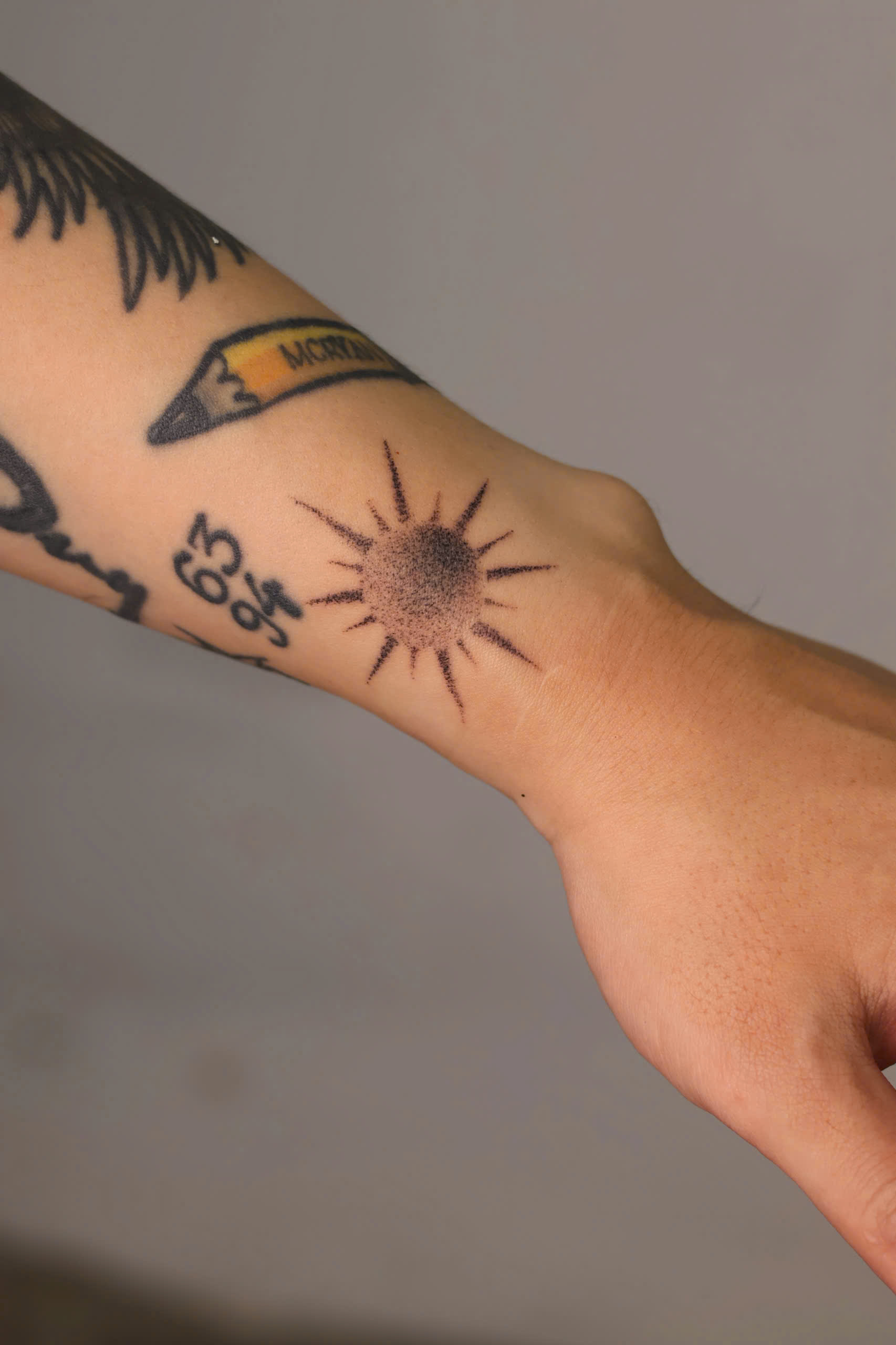
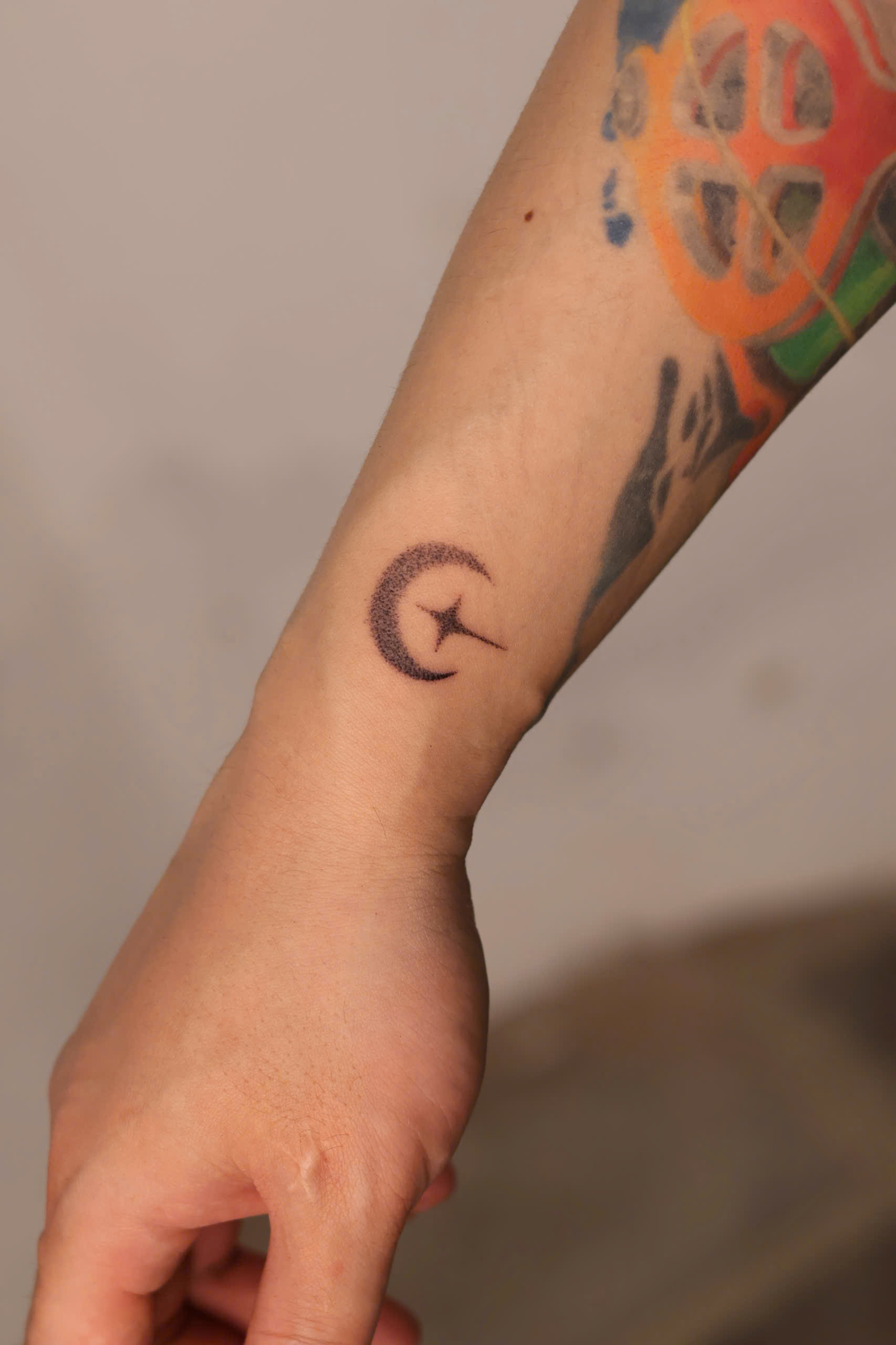
- Lines are built from dots. Many dots in sequence form a line. Dots vary in spacing and density, creating shading, texture, and pattern.
A machine pushes a needle in and out at high speed. Handpoke places each dot deliberately. This is why the work looks distinctive. It has a soft, organic, slightly textured quality that machine work does not replicate exactly.
Why It's Harder Than It Looks
Handpoke is deceptively demanding.
- It takes time. A design that a machine finishes in an hour can take several hours by hand. Every dot is a decision.
- It takes control. Consistent depth, spacing, and angle, with no motor to steady the rhythm, is a skill built over years.
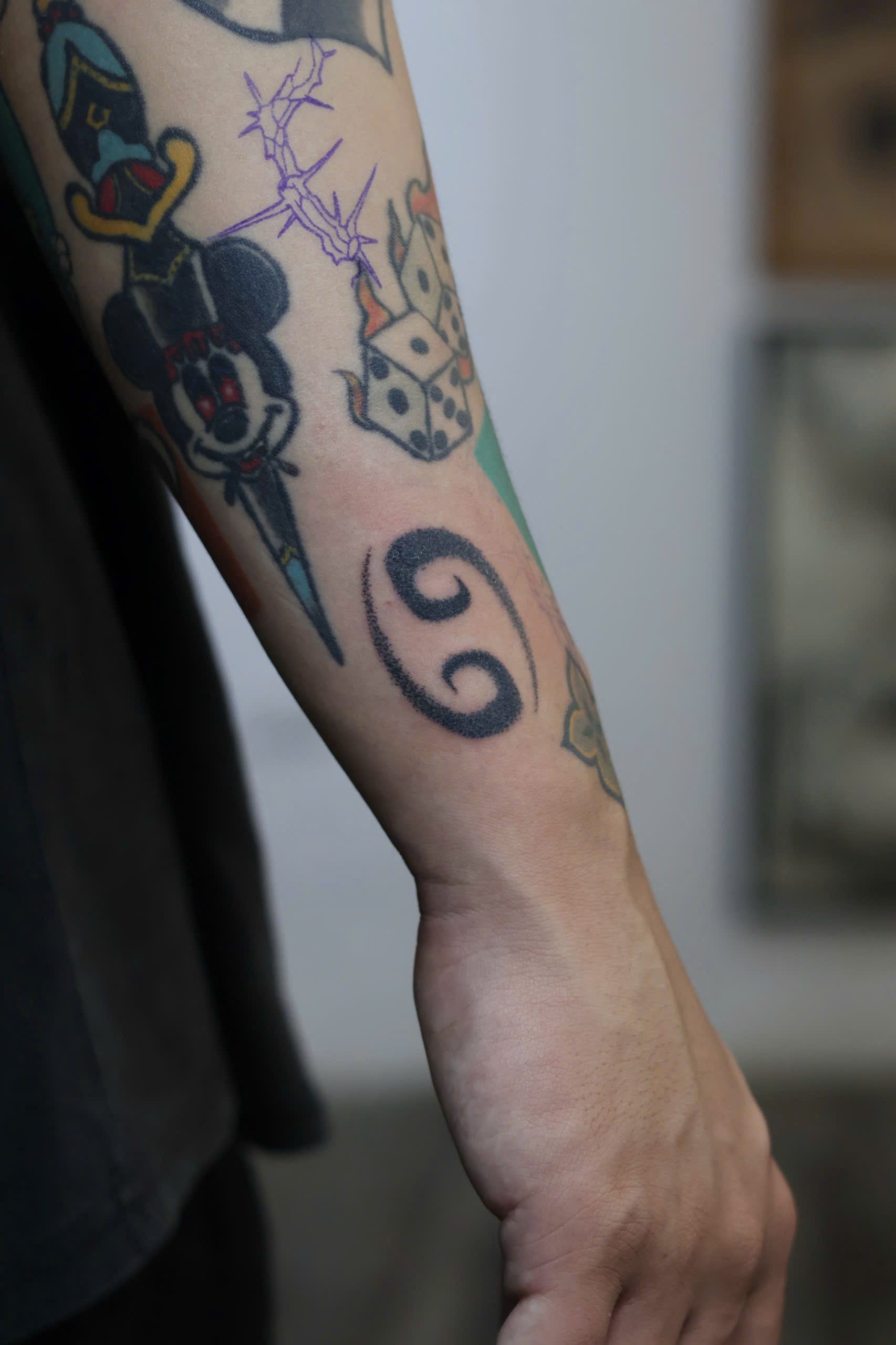
- It rewards patience in the design. Fine lines, dotwork, geometric patterns, mandalas, and small symbolic pieces are where handpoke shines. Large, heavily saturated or bold-black pieces are usually better suited to a machine.
- It leaves no room for sloppiness. Dotwork and fine geometry expose every inconsistency, so the artist's precision matters.
If you want a bold, solid-colour sleeve in one sitting, handpoke is probably not the right tool. If you want something delicate, intentional, and meaningful, it is.
Skin Health and Healing: The Honest Version
Many people say handpoke feels gentler and heals more smoothly. That is plausible, since the slower, lighter process can feel less aggressive on the skin, and many clients and artists report easier healing. But it is worth being honest: this varies from person to person, and "by hand" does not automatically mean "safer."
What actually determines how well a tattoo heals is:
- Hygiene. Single-use sterile needles, gloves, clean surfaces, and proper disposal are non-negotiable. A handpoke done with a needle and a bottle of ink at a kitchen table is a real infection risk. A handpoke done in a professional studio is not.
- Technique. Even depth and a light touch reduce trauma to the skin.
- Aftercare. Gentle washing, thin layers of an appropriate healing ointment, no picking, no soaking, and no sun exposure while it heals.
Typical healing takes 2 to 4 weeks for the surface, with the skin fully settling over a couple of months. Because handpoke is delicate, touch-ups to even out small gaps are common and normal.
As for pain, it is subjective. Many describe handpoke as a steady, tapping sensation that feels milder than a machine, though longer sessions can add up. Placement matters more than method: ribs, ankles, and inner arms hurt more than outer arms or thighs.
Is Handpoke Right for You?
Handpoke is a good fit if you:
- love fine, minimal, or dotwork designs
- want a tattoo with cultural or personal meaning
- value a calm, quiet session over the buzz of a machine
- are happy to be patient with time
It is worth talking through with your artist if you want large, dark, or highly detailed work.
Where Art Meets Skin
At Crimson Tattoo Studio in Hanoi, we respect the craft's history and take its modern safety seriously. Whether you want a Đông Sơn-inspired pattern, a lotus, or a small symbol that means something only to you, our artists will help you decide whether handpoke is the right method for your design.
Book a consultation and let's talk about your idea.
Crimson Ink Studio
No. 98 Quan Thanh, Ba Dinh, Hanoi, Vietnam
Email: [email protected]
Phone: + 346.955.898